When you run a cafe, food cart, or any spot slinging drinks all day, the cup itself becomes part of your brand story without saying a word. Here’s a straight-talk comparison built around what actually happens in real service, not just lab claims or marketing lines.
Everyday Strengths That Keep PE Lined Paper Cups Dominant
PE Lined Paper Cups count on a polyethylene layer sourced from petroleum to deliver strong protection against liquids and grease. This film keeps everything contained—no soaking through even with fresh, steaming coffee, heavy cream-based shakes, or soups with a bit of oil—meaning no wet hands or ruined counters during service.
Lots of places continue using them because they hold steady under pressure: the cup doesn’t weaken mid-rush, lids fit tight and stay on, and they pack efficiently in small storage areas.
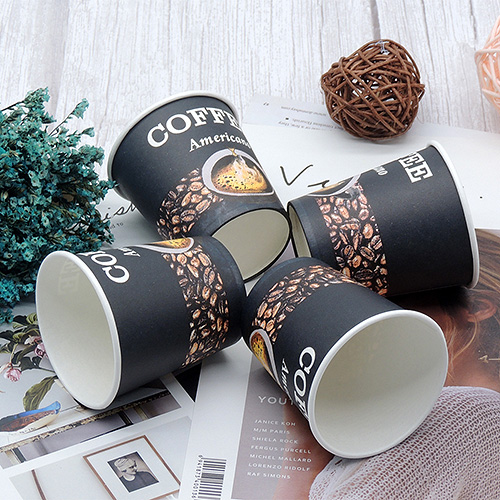
Growing Appeal of PLA Lined Paper Cups for Conscious Brands
PLA Lined Paper Cups apply a lining derived from plant fermentation, typically from corn starch or sugarcane sources. This gives dependable leak resistance for normal cafe operations while depending far less on oil during creation, often resulting in lower production emissions and a shift toward renewable feedstocks.
What really sways many owners goes past technical details: in communities focused on green living—like city centers, college areas, or active-lifestyle zones—customers actively seek out compostable markings. Spotting that feature frequently translates to higher tips, positive social posts, or choosing your business instead of the competition nearby. That kind of customer reaction can create a lasting advantage in busy markets.
Direct Head-to-Head: Performance, Wallet, and Planet Factors
Line them up plainly and the contrasts stand out.
PE Lined Paper Cups typically lead in:
- Superior tolerance for very high heat without any give
- Cheapest straight purchase price (frequently 30–50% under PLA equivalents)
- Bulletproof consistency that needs zero staff retraining
PLA Lined Paper Cups gain ground when you weigh:
- Stronger messaging for sustainability-minded crowds
- Possible cuts in disposal costs where composting pickup is easy
- Branding boost that lets you charge a touch more without pushback
Clear Steps to Pick and Test Without Wasting Time
Sort this out practically.
Step one: Check your sales data—what’s the hottest item temperature-wise? If near-boiling drinks rule the menu, PE Lined Paper Cups give the safest bet for zero drama.
Step two: Google your area’s waste services—see if commercial composting is collected and accepted nearby. If not, PLA loses most of its edge.
Step three: Tally total ownership costs: per-cup price + shipping + any new fees or taxes on packaging – any lift from eco appeal (better reviews, loyalty, slight price hikes).
Step four: Bring in small test runs of both types. Put them through a busy morning—fill hot, add ice, hand off, store. Watch for issues, then ask crew and a few customers for raw opinions. That quick field test usually settles it.
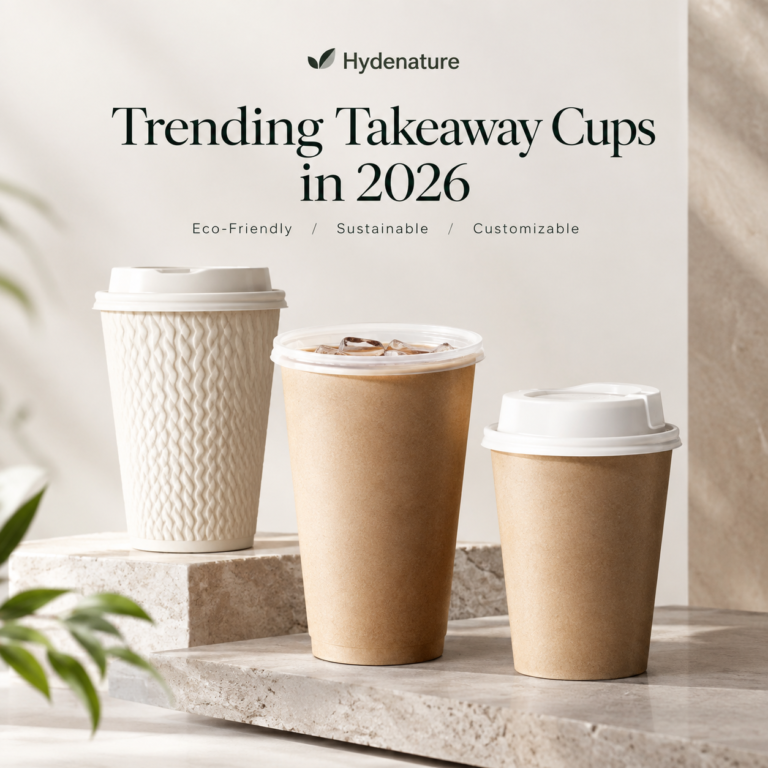
At Hydenature we produce both PE Lined Paper Cups and PLA Lined Paper Cups in any size, wall style, or print design you need, we’ll help you customize the perfect solution.