Each year, the world throws away hundreds of billions of disposable cups. Coffee shops, offices, and airplanes rely on them constantly, yet growing numbers of customers now wonder: “Is what’s lining this cup ending up in my drink?” Let’s look at the real materials, the actual risks, and the simple ways to choose better—no scare tactics, just clarity.
What’s Really Inside Your Takeaway Cup
The cup itself is made from heavy-duty paperboard—essentially thick, food-grade cardboard. That part is completely safe. The key is the ultra-thin inner coating that keeps liquid from seeping through.
Since the 1980s, that inner layer has nearly always been a plastic-based film—most commonly polyethylene, and in many cases boosted with PFAS-type chemicals for superior oil and water repellency. These coatings are highly effective at keeping the cup intact, but once they’re exposed to very hot and slightly acidic beverages (like espresso or black tea), the elevated temperature can cause the lining to degrade slightly, releasing minute flakes or allowing chemical traces to leach out.
The great thing is that many manufacturers have now abandoned those older formulas entirely. They’ve switched to next-generation alternatives such as plant-sourced biopolymers, water-dispersed acrylic coatings, or engineered fiber treatments that repel liquid without using any traditional plastic film. These newer coatings stay completely stable for the 10–30 minutes you actually need, and independent tests show they transfer essentially nothing into your drink.
Do They Hold Up When the Liquid Is Really Hot?
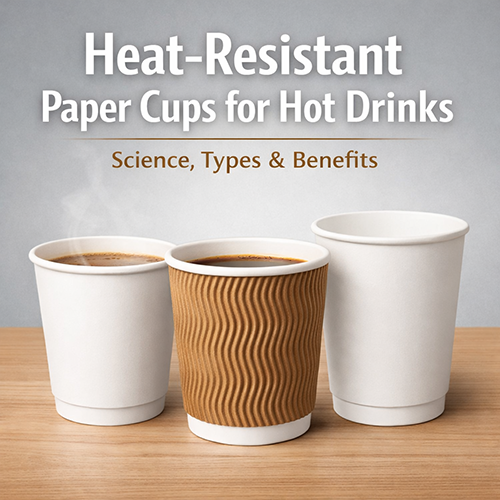
Yes—if they’re designed for the job. Cups made specifically for hot drinks use heavier board, precision-sealed sides, and temperature-stable coatings. They stay firm and comfortable to grip even when filled with liquid straight off the boil. Generic or low-cost cups meant for cold drinks, however, often soften, sweat, or spring tiny leaks once the temperature climbs past 75–80 °C.
What Recent Research Has Found in Hot Drinks
Multiple peer-reviewed papers and certified lab reports released since early 2023 reveal a consistent pattern:
- Conventional PE-lined cups routinely release several thousand microplastic particles when filled with 95 °C water and left for 15 minutes.
- Samples from cups treated with legacy PFAS chemistries occasionally show low but detectable levels of those compounds in the liquid.
- Cups using fully updated water-based or bio-polymer barriers consistently register zero or near-zero migration, even in worst-case hot-fill tests.
One-off use is negligible, but the cumulative effect of drinking from traditional lined cups every single day is now considered an exposure worth eliminating.
Easy Ways to Choose Safer Cups Every Time
- Only buy from suppliers who provide cups clearly marked “PFAS-free” along with third-party verification documents.
- Make sure the packaging or spec sheet lists compliance with major food-contact regulations (FDA 21 CFR, EU 1935/2004 & 10/2011, BfR, etc.).
- Go for cups that use aqueous dispersion coatings, corn-starch-derived PLA, or other proven plastic-free barrier systems designed specifically for hot liquids.
- Never microwave a disposable cup—the extreme heat spike greatly increases any potential migration.
- Stick to single use only; washing or refilling breaks down the protective layer.
Why Hydenature Cups Stand Out
We only offer paper cups that pass the toughest real-world tests:
- 100 % free of intentional PFAS
- Advanced water-based barrier that stays stable above 100 °C for extended contact
- Heat-sealed seams with zero glue
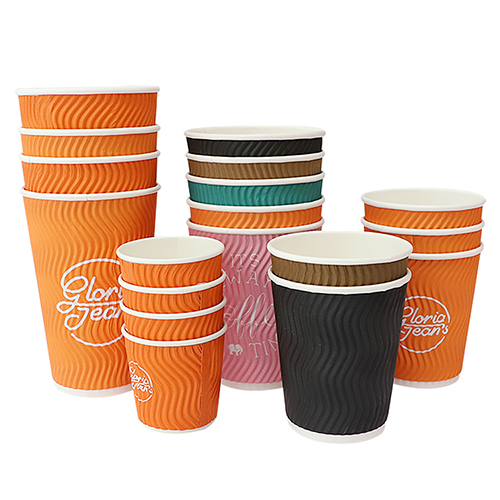
- Excellent insulation in a lightweight single-wall format
- Industrially compostable and printed with vegetable inks
Coffee shop owners who switch to Hydenature report fewer leaks, happier customers, and the confidence that comes from serving drinks in genuinely clean packaging.
The Bottom Line
Old-style plastic-lined cups aren’t “poisonous,” but they do release more particles and chemicals than necessary when used with piping-hot liquids. Modern, responsibly made alternatives are widely available, cost almost the same, and perform just as well—or better.
Making the switch is one of the easiest ways to remove a small but unnecessary question mark from your daily coffee ritual.
Ready to serve drinks you can feel great about? Get in touch with Hydenature today for free samples and full test documentation.