Single-use plates, bowls, and cups carrying the “compostable” tag pop up constantly these days—in neighborhood cafes, backyard barbecues, festival food lines, and casual family dinners. The appeal is obvious: grab what you need, finish eating, then send it off to a collection bin expecting it to return harmlessly to the earth as nutrient-rich humus.
Why Loose Terms Create Confusion
Phrases such as “biodegradable,” “naturally decomposing,” or “made from plants” show up frequently on labels, yet in most places they carry little or no official meaning. One item could slowly split into tinier fragments while floating in seawater and still qualify as biodegradable under loose definitions. Another might carry an “environmentally kind” tag but include additives that stay in the ground long after use. Without clear, repeatable tests these descriptions remain unreliable. Proper certifications change the picture by putting products through rigorous, science-based evaluations that mimic actual composting processes.
Two key technical specifications set the performance bar for these professional operations:
- ASTM D6400 — The main reference point across North America — insists that no less than 90 percent of the substance must transform into carbon dioxide, water, and biological matter over roughly 180 days. The product has to fragment physically until almost nothing larger than 2 mm remains, and the end compost needs to support normal plant seedling growth with zero signs of toxicity.
- EN 13432 — The standard most often applied in Europe for packaging and disposable goods — calls for essentially the same outcomes: thorough physical breakdown, strong biodegradation levels, minimal heavy metals, and compost that does not inhibit plant development.
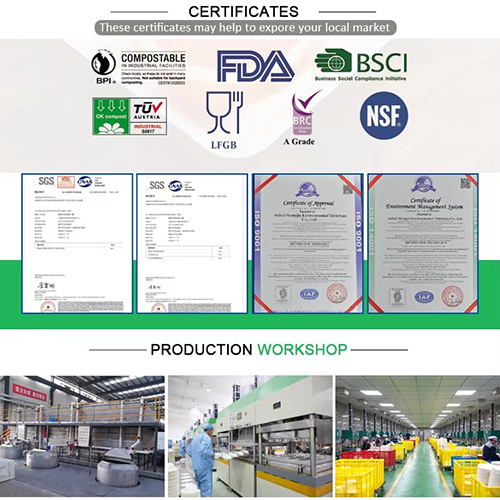
Though the wording differs slightly between the two, the real-world requirements they enforce line up very closely.
Four Practical Checks Anyone Can Do
Before trusting a “compostable” label:
- Spot the actual certification logo (the BPI leaf or OK seedling symbol), not just words.
- Search the certifier’s online registry using the product code or brand name to verify it’s listed.
- Confirm which type matches your local system—industrial for city collection programs, home for personal bins.
- Treat plain “biodegradable” claims with caution unless backed by one of these marks.
Products that carry these credible seals have a far higher likelihood of turning completely into usable compost—becoming a source of nourishment for soil rather than leaving bits behind or adding questionable elements. Taking a moment to read those marks carefully can decide if an item genuinely helps build a sustainable cycle or merely relocates the same waste challenges.
Our team offers full customization for compostable paper tableware. Reach out anytime—we’re happy to help tailor solutions that fit your needs perfectly.