People grab disposable plates for outdoor barbecues, fast workday lunches, food cart eats, and family celebrations pretty much every day. More and more are realizing lately that plenty of these everyday items secretly hold onto PFAS chemicals that linger forever in the environment and in our systems.
At hydenature.com we feel it’s important to shine a light on safer, smarter choices that look after people and the planet at the same time.
Where Do PFAS Show Up in Single-Use Plates?
Producers frequently add special chemical coatings to regular paper plates and pressed-fiber ones so fats and liquids don’t soak right through. That coating builds a sturdy defense that keeps saucy or oily foods—like cheese-drenched nachos, barbecue-slathered wings, or topping-heavy burgers—from making the plate turn mushy or drip. Sadly, quite a few of those coatings depend on the wide category of artificial compounds known as per- and polyfluoroalkyl substances, better known as PFAS.
Real-World Reasons People Are Looking for Change
Using one plate at a weekend gathering won’t raise red flags, but the slow, steady buildup coming from takeout clamshells, donut boxes, cup-of-soup lids, and ordinary disposable plates every week really adds up across a lifetime. That’s why so many parents make a conscious effort to lower those repeated tiny doses, especially when kids are still developing.
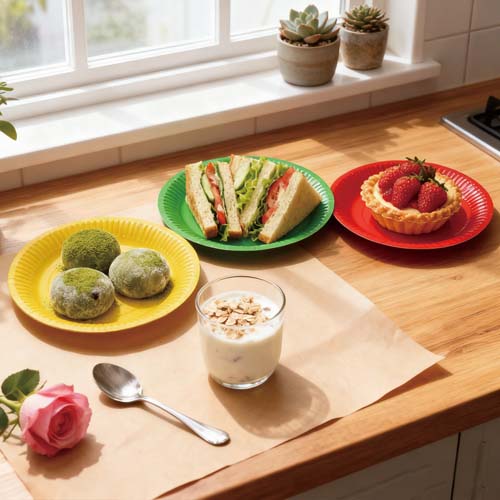
How to Pick Plates You Can Actually Trust
Not every “eco-friendly” claim tells the full story. Here’s a practical checklist we use ourselves:
- Demand transparency — The best brands state “PFAS-free” clearly on packaging or websites. Vague phrases like “chlorine-free” or “no plastics” don’t address the issue.
- Favor uncoated or plant-based barriers — Plenty of companies now opt for options such as starch-derived layers or natural wax-based treatments that keep moisture out safely and avoid long-lasting artificial chemicals.
- Test durability in real situations — Pop some reheated food on one plate in the microwave, spoon very hot chili onto another, or pile wet fruit salad onto a third. Solid PFAS-free disposable plates won’t warp and won’t show any grease coming through from below.
- Think about end-of-life — Industrial composting facilities turn many of these plates into soil in a matter of weeks. Home composting works for some uncoated styles, though always check local rules.
Small swaps like this feel minor at first, but they quietly reduce chemical footprints across thousands of meals.
We carry a full selection of PFAS-free disposable paper plates at hydenature.com, built from renewable fibers that perform without shortcuts. They hold up well for daily use and let you pick convenience without sacrificing health or the environment.
Drop us a message whenever you’re ready to talk options. Cleaner choices start with one conversation.