Next time you grab a carton of eggs, take a second look at that modest gray holder. It isn’t plastic, isn’t foam—just a humble cradle that somehow keeps delicate shells safe across continents. We usually drop it straight into recycling without wondering what it’s really made from.
The Primary Material: Everyday Paper Waste
Almost every paper egg tray begins as ordinary trash that’s been given another chance. Plants take in tons of thrown-away newspapers, used shipping cartons, office printouts, and packaging cardboard. After sorting out tapes and staples, workers soak and beat everything into a dense, watery paste inside massive tanks. This reborn mixture is what makes the trays feather-light, naturally shock-absorbing, and gives them that honest recycled appearance shoppers immediately associate with being green.
What Makes Them Actually Strong: Selected Waste Fibers
Not all waste paper performs the same. The most reliable trays get their toughness from reclaimed corrugated boxes (OCC) and old newspapers (ONP)—fibers that are significantly longer and more elastic than those in standard copy paper. When these fibers weave together under pressure, the result is a tray that laughs at humidity, heavy stacking, and rough handling. Only for very demanding wet environments do factories add a pinch of fresh kraft fiber; regular production stays completely post-consumer.
Natural Additives You Rarely Hear About
To make the trays functional rather than just decorative, a few safe additives are mixed in:
- AKD or rosin sizing – tiny amounts (less than 1%) make the tray water-resistant so eggs don’t get soggy in the fridge
- Wet-strength resins – help the tray hold together when wet
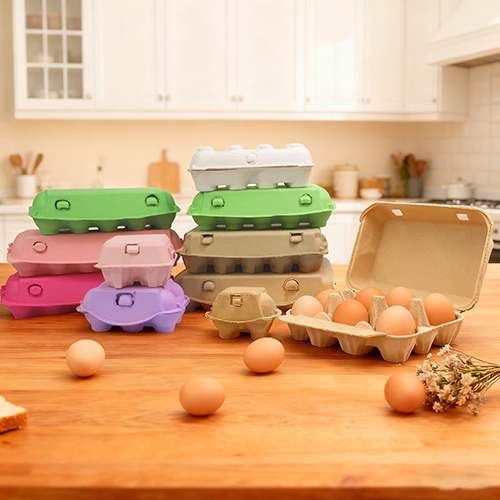
- Natural pigments – occasionally added if customers want colored trays (green, pink, or black for premium brands)
All of these are food-contact approved and biodegradable.
How the Magic Happens: From Waste Paper to Egg Protector
- Waste paper arrives → shredded and soaked
- Slurry is screened to remove staples, tape, and plastic
- Clean pulp is pumped into molding machines
- Vacuum-formed on egg-shaped molds and pressed
- Dried in large ovens, trimmed, and stacked
The entire process uses almost no fresh wood and very little energy compared to plastic or foam.
Paper Egg Trays vs Plastic vs Foam: Quick Comparison
| Feature | Paper Egg Trays | Plastic (PET) | Styrofoam |
| Raw material | 100% recycled paper | Virgin petroleum | Petroleum |
| Biodegradable | Yes (60–90 days) | No | No |
| Recyclable | Widely accepted | Sometimes | Rarely |
| Nesting & stacking | Excellent | Good | Good |
| Cost (B2B bulk) | Lowest | Medium | Medium |
Why Top Brands Are Switching Back to Paper
Major retailers and organic farms are returning to paper egg trays because consumers instantly recognize them as the “greener” choice. The rough, natural texture photographs beautifully on social media and reinforces premium or farm-fresh branding.
At Hydenature, we specialize in B2B supply of high-quality molded pulp egg trays (1-egg, 4-egg, 6-egg, 8-egg, 12-egg, 20-egg, 30-egg, quail egg, duck egg, and custom designs). All trays are made from 100% recycled paper with customizable printing, colors, and strength grades.
Need branded egg trays that match your sustainability story perfectly? Contact us at hydenature.com for free samples and custom quotation today.