Nothing beats snagging a steaming latte on the fly, paper sleeve snug around that familiar cup. Here at Hydenature.com—your go-to source for natural paper cups that skip the plastic lining—we peel back the layers on how these everyday vessels stack up for the planet. “Eco” labels sound promising, yet the truth hinges on what’s inside, how it’s handled, and where it ends up.
Smarter Builds from the Start
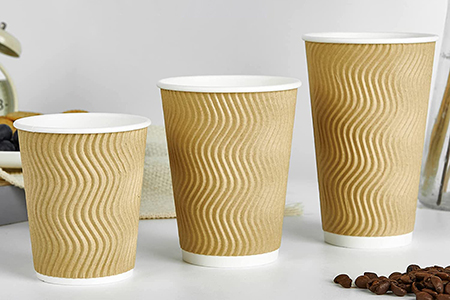
Our own Hydenature paper cups lean on water-based barriers instead of polyethylene. Hot water and clever chemistry create a leak-proof shield that vanishes in commercial compost within 180 days. We also press sugarcane bagasse into ripple-wall designs, turning harvest leftovers into insulation that keeps fingers cool without foam. Every batch uses FSC-certified pulp, meaning each ream spares roughly a dozen trees compared to virgin fiber runs.
Switching to these setups slashes fossil fuel demand. Independent cradle-to-gate audits clock our cups at 40% lower CO2 than standard PE-coated versions when composted correctly.
The Disposal Disconnect
Reality bites. Fewer than one percent of takeout cups hit industrial composters. Most mingle with trash, where PLA hardens into useless chunks and bagasse simply rots slowly. Mixed plastic layers jam paper mills, so entire bales get rejected. Each year, roughly 250 billion cups pile up globally, forming mountains that could circle Earth’s equator twice if laid end to end.
Sourcing the raw starch still pulls water—one of our PLA cups traces back to about 180 liters from soil to shelf, close to a five-minute shower.
Bright Spots in the Chain
Smart cities prove progress is possible. San Francisco’s mandatory compost program pulls 35% of food-service waste from landfills. Return-loop cafes collect used cups, shred them, and mold them into picnic tables. Marine patrols now spot fewer lid rings tangled around seal necks.
Shoppers who see a compost symbol on their latte sleeve often switch to metal tumblers within a month, cutting their personal cup count by 80%.
Everyday Moves That Add Up
- Ask your barista if their “compostable” cup actually leaves the block—many cities still lack the trucks.
- Pack a foldable silicone cup; it collapses to keychain size and pays for itself in saved landfill space after 20 fills.
- Back brands that print batch numbers so empty cups trace back to pulping partners.
Disposable coffee cups can lighten the load when design, collection, and processing align. Until then, they’re a temporary patch. Swing by Hydenature.com to grab plastic-free paper cups in bulk—certified compostable, tree-friendly, and ready for your next brew without the baggage.