For businesses partnering with a paper food packaging manufacturer, switching to sustainable packaging is no longer a hollow marketing buzzword. It’s a data-backed, actionable step to reduce long-term environmental impacts while meeting growing customer and regulatory expectations.
Every 1,000 standard PP plastic disposable plates consume approximately 3.1 kg of crude oil-derived raw materials during production. Paper-based disposable tableware, by contrast, is produced primarily from renewable FSC-certified paperboard and responsibly sourced fiber, dramatically reducing dependence on fossil-based feedstocks across the packaging supply chain. Modern paper packaging manufacturers also incorporate recycled fiber wherever food safety regulations permit, further lowering environmental impacts. According to 2025 field data collected by the European Food Service Packaging Association, paper-based food packaging can reduce cradle-to-gate greenhouse gas emissions by up to 58% compared with conventional virgin plastic packaging.
| Packaging Variant | Raw Material Base | 1000-Unit GHG Output | Full Decomposition Timeline* | Key Global Certifications |
| Virgin PP Plastic Cutlery Set | 100% Crude Oil | 3.1 kg CO₂e | 240+ years | FDA 21 CFR Part 177 |
| Post-Consumer Recycled PP | 75% Recycled Plastic | 1.7 kg CO₂e | 190+ years | EU 10/2011 |
| Paper Food Bowl (FSC Paperboard) | Renewable Paper Fiber | 1.1 kg CO₂e | 90–180 days | FSC, BPI, EN 13432* |
| CPLA Straw | 88% Corn Starch | 1.3 kg CO₂e | 140–180 days | ASTM D6400 |
*Decomposition time depends on coating type and local composting or recycling infrastructure.
When placing bulk orders, first map every product SKU to the certification requirements of your target market—never accept vague “eco-friendly” claims without complete traceable documentation. Verify whether your paper packaging complies with FSC, FDA, BRC, LFGB, EN13432, or other regional regulations before procurement.
Second, conduct a small 200-unit operational trial to evaluate hot food resistance, leak prevention, microwave compatibility, lid fit, and stacking performance. Paper cups, bowls, and food boxes may perform differently depending on coating technology, paper weight, and manufacturing quality. A 2024 case study involving a 120-location European café chain found that switching to a certified paper food packaging supplier reduced annual packaging-related waste management costs by 31% while helping the company avoid approximately £147,000 in projected single-use plastic tax penalties.
Frequently Asked Questions
Will paper disposable tableware break down in regular home compost bins?
Most PE- or PLA-coated paper bowls, paper cups, and paper food containers perform best in commercial composting or paper recycling systems. Home compost bins usually cannot maintain the stable temperature and moisture required for rapid decomposition, so businesses should clearly communicate proper disposal methods to improve recycling and composting efficiency.
How much extra will sustainable paper packaging add to my annual operational costs?
For orders exceeding 50,000 units per SKU, the average price difference between certified paper food packaging and conventional plastic packaging has narrowed to around 9% as of 2026. After accounting for reduced plastic taxes, lower waste management costs, and stronger consumer preference for sustainable packaging, many businesses recover the additional investment within the first year of implementation.
Can custom paper food packaging match the print quality of plastic packaging?
Yes. Modern water-based food-safe printing technologies provide vibrant colors, sharp logo reproduction, and excellent print consistency on paper cups, paper bowls, paper plates, and paper food boxes. These printing systems produce virtually no volatile organic compound emissions while maintaining strong brand presentation for restaurants, cafés, takeaway chains, and catering businesses.
Why Choose Hydenature
Hydenature specializes exclusively in wholesale paper food packaging for global B2B buyers who require reliable quality, complete product traceability, and dependable supply chain performance. Every product is manufactured under strict quality management systems, with comprehensive inspections covering paper strength, coating adhesion, leak resistance, dimensional accuracy, printing quality, and overall structural integrity before shipment.
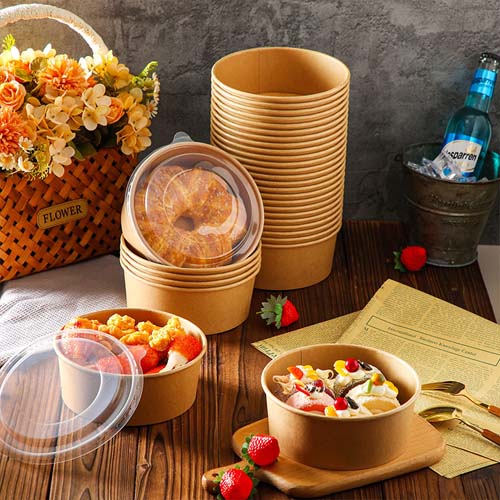
Our manufacturing capabilities support a wide variety of food service operations. We provide custom paper cups, paper bowls, paper plates, paper food boxes, paper bags, and custom printed paper packaging with flexible custom sizing, food-safe printing, low MOQ options for market testing, comprehensive OEM & ODM services, and stable wholesale production capacity. Whether you operate restaurants, cafés, catering companies, food delivery services, supermarkets, or international distribution businesses, Hydenature delivers durable, sustainable paper packaging solutions designed for reliable daily performance while supporting your environmental goals.