If you’ve ever sat through three supplier calls where every vendor calls their disposable food packaging “100% eco-friendly” without naming a single test number, you know the frustration. For B2B buyers running restaurant chains, grocery deli programs or export food service lines, mixing up biodegradable and recyclable packaging doesn’t just kill your sustainability marketing — it can land you with EU EPR fines, US state-level greenwashing penalties, or 20,000 units of stock that your local waste authority refuses to accept for recycling. 95% of all food packaging gets tossed straight in general waste after one use, and over a third never touches a formal recycling system at all.
That’s not a consumer problem — it’s a packaging design and sourcing problem that most suppliers never bother to spell out clearly.
The Core Difference No Generic Blog Tells You
Here’s the unglamorous, factory-floor truth: biodegradable packaging is built to disappear, recyclable packaging is built to come back.
Biodegradable disposable tableware uses plant-derived feedstocks like bagasse, PLA or wheat straw, engineered to break down via microbial activity into water, CO₂ and inert biomass — but only if it lands in the right conditions.
Recyclable food packaging, by contrast, is designed for the sorting line first. It skips mixed layers, avoids non-separable coatings, and is made from a single material that local reprocessing plants can wash, shred and melt straight back into new packaging pellets. It never “breaks down” in nature — it gets remade, over and over.
Real-World Performance Breakdown for Food Service
| Metric | Certified Biodegradable Food Packaging | Food-Grade Recyclable Packaging |
| Required Disposal Environment | Industrial compost facility (60°C, constant moisture, 90+ days) | Standard municipal MRF (material recovery facility) |
| Mandatory Global Standard | EN 13432 / ASTM D6400 (minimum 90% biodegradation in 180 days) | CEPI 4evergreen recyclability protocol (95% material purity for sorting) |
| Actual Field Breakdown/Reprocessing Rate | 62% in regions with active compost collection, 0% in areas without | 72% for uncoated mono-material PP#5 trays, 81% for unlined kraft paper |
| Food Contact Temperature Limit | 100°C for bagasse, max 65°C for unmodified PLA | 120°C for food-grade PP, safe for microwave reheating |
| Unit Cost Shift vs Conventional Plastic | +32% to +58% | +7% to +18% |
| Most Common Hidden Risk | Contaminates standard paper recycling streams if sorted incorrectly | Food grease residue ruins 12% of otherwise recyclable batches |
No-BS Procurement Rules for Buyers
Skip the generic “green packaging” sales pitches, and use these 3 rules to pick the right stock:
- If your end customers are premium DTC salad bars, zero-waste cafes or organic meal kit brands, go for BPI-certified bagasse clamshell containers. Your customers will actively seek out compostable options, and the 30-50% price premium will not hurt your sales margins.
- If you are sourcing for a 200-location fast food chain or supermarket ready meal program, stick to mono-material PP#5 recyclable food trays. The low 5-20% cost premium keeps your EPR fees manageable, and you avoid the risk of compost infrastructure gaps killing your sustainability claims.
- If you run small-batch pop-ups or local event catering, pick molded fiber disposable plates that are both home compostable and fully recyclable — you get dual compliance without overpaying for niche certifications.
Always ask your compostable food containers manufacturer for full test reports, not just a one-page “eco certificate” — any legitimate supplier will share full lab data on biodegradation rates and recycling compatibility.
Real Buyer FAQ (No Generic Answers)
- If I buy biodegradable packaging, do I still need to run a separate recycling program for my store?
- Absolutely yes.
- Can I mix recyclable and biodegradable SKUs in the same wholesale order to cut costs?
You can, but never mix the two material types in the same customer packaging bundle. Keep them separated, and print 1-line disposal instructions directly on each item. - What’s the biggest mistake new eco-friendly food packaging supplier buyers make?
- Picking packaging based only on Instagram-worthy aesthetics, not local waste rules. A buyer for a 50-location coffee chain once ordered 1 million PLA-lined cups, only to find out their city banned all PLA products from local compost programs — they ended up sending every single used cup to landfill, and wasted $120,000 on a “sustainable” upgrade that delivered zero environmental benefit.
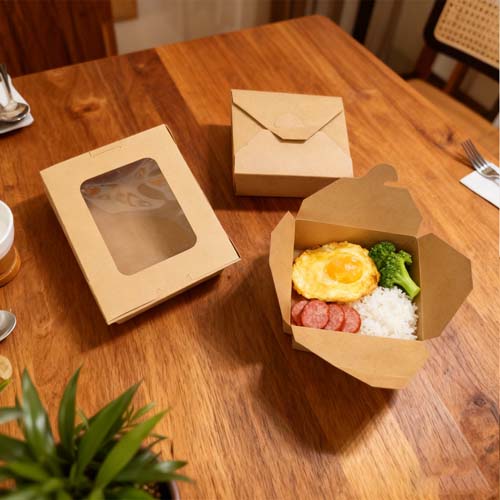
Custom Manufacturing Capabilities
We provide custom size, custom printing, low MOQ support, OEM & ODM service, and bulk wholesale supply for global buyers. Grab yours now at hydenature.com – choose from Paper Cups, Paper Salad Bowls, Paper Plates, Paper Food Boxes, Paper Bags, Paper Straws, Paper Envelopes, Egg Trays, Popcorn Buckets, and more.