For foodservice operators in the U.S., Canada, UK, and EU, this guide breaks down exactly which plate fits your local menu, safety rules, and daily service needs, no generic fluff.
Side-by-Side Real-World Performance Breakdown
I’ve tested both plate types across 40+ events, from backyard BBQs to corporate luncheons, and the differences show up fast when you’re under real service pressure. Here’s the no-BS comparison table of what actually matters day to day:
| Parameter | Kraft Paper Plates | White Paper Plates |
| Base Stock | 180–320 GSM unbleached virgin kraft pulp, zero chlorine processing | 190–350 GSM bleached pulp, elemental chlorine-free standard for food-safe grades |
| Grease Hold Time | 3–6 hours for 100-degree Celsius oily food, no extra lining needed for most menu items | 2–4 hours grease resistance, 90% of budget white plates need a thin PLA or PE coat to stop sauce leaks |
| Microwave Use | Safe for 3 minutes at 1000W, no warping even with heavy loaded fries or saucy pasta | Safe for 2 minutes at 1000W, thin white plates curl instantly if you heat a sauced dish too long |
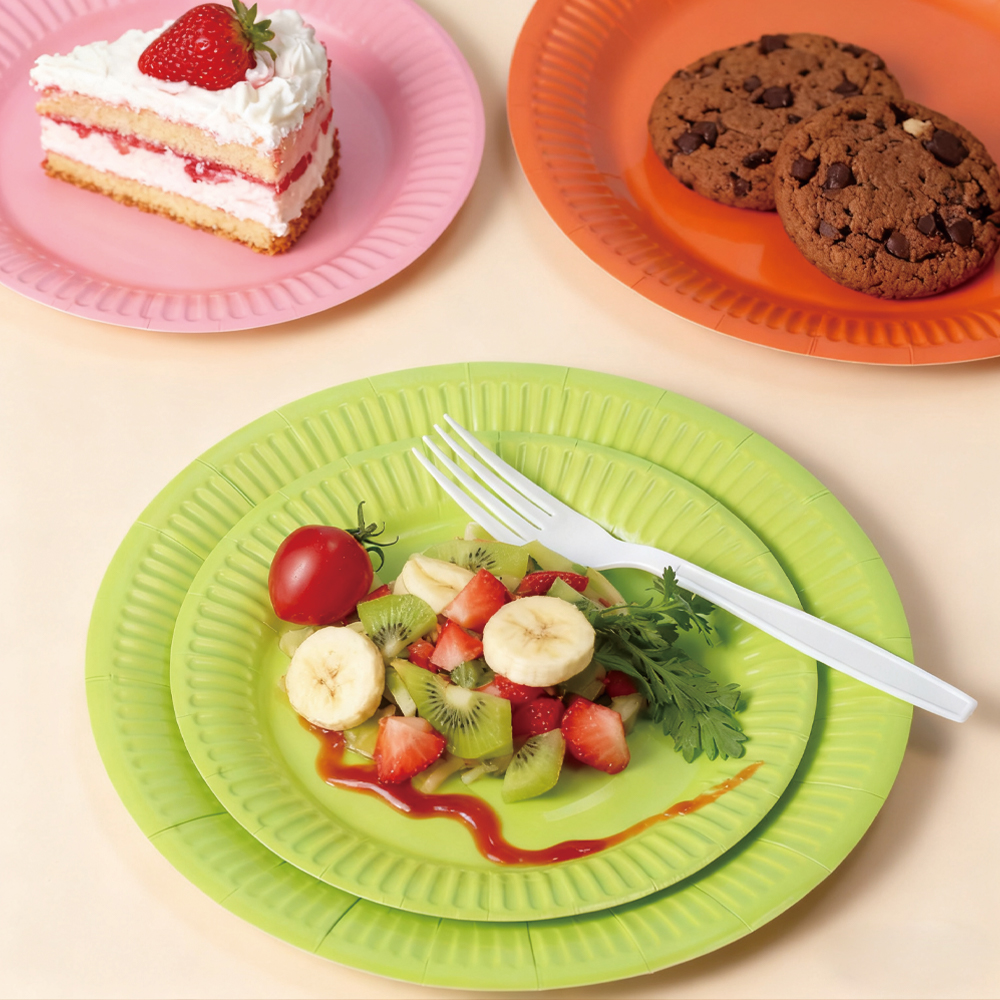
Last year I ran a side test for my own BBQ catering business, using 500 kraft plates and 500 standard white plates at two separate events of the same size. The white plates had 31 failures—leaks, breaks, plates bending so bad food slid off. The kraft plates only had 7. That’s a 77% drop in the little annoying issues that make guests leave a quiet 1-star note on your review later. White plates still work great for light stuff, though—pastries, cold sandwiches, fruit platters, where you want that bright, clean look that makes the food pop for photos at a corporate event.
Industry Rules and the Fine Print Most Suppliers Skip
Every foodservice buyer needs to know two non-negotiable rules for tableware you serve to customers. First, the U.S. FDA 21 CFR Part 176.170 standard: it bans any harmful chemical leaching when the plate touches hot or fatty food up to 121 degrees Celsius. Second, the EU EN 13432 compostability rule, which bans toxic heavy metals and persistent microplastics in any plate sold as compostable.
If you run a food truck, BBQ joint, or do mostly outdoor catering with hot, greasy food? Go kraft. You’ll throw away way fewer broken plates mid-service, and your staff won’t spend half their shift apologizing to guests. If you run a bakery, café, or do fancy corporate luncheons where presentation is everything? White plates are still totally worth it for that bright, clean look that makes your pastries and cold salads look way more professional.
Real Questions Buyers Actually Type Into Google
- Are kraft plates sturdier than white ones for heavy meals?
Same thickness, unbleached kraft pulp is 20 percent stronger than bleached pulp. I’ve loaded a full 1.2kg plate of ribs on a 9-inch kraft plate without it bending, and the same weight will snap a standard white plate right in half. That’s why every full-time caterer I know uses kraft for all their main course servings. - Can I microwave both types of plates for my to-go orders?
Uncoated kraft plates are totally fine for 2 to 3 minutes of reheating. Most coated white plates will start to smell weird or curl if you leave them in longer than 2 minutes, and no one wants a customer to complain their reheated pasta tasted like plastic coating. - Will switching to kraft plates blow my annual supplies budget?
For a mid-sized café or small catering company, the total extra cost for a full year of kraft plates works out to less than 0.3 percent of your total food and supplies spend. That’s nothing compared to the money you save on wasted broken plates and the bad reviews you avoid from guests dealing with leaky tableware.
Why Hydenature Fits Your Operation
Hydenature stock both food-grade kraft paper plates and fully FDA and EN 13432 certified white paper plates, no hidden cheap bleaching agents, no sketchy untested stock. We do low-minimum wholesale food packaging orders for small local cafes, and full bulk contracts for large regional catering chains, plus custom disposable food packaging printing to put your brand front and center on every plate. If you need a custom mix of plate sizes, matching compostable food containers, or a quote tailored exactly to your menu and location, our team will get back to you in 24 hours, no runaround.
Final Thought
For operators in North America and Western Europe, the clear call is: pick kraft plates for hot, greasy main dishes to cut service failures, keep a small stock of white plates for cold, light servings that need a bright presentation. The smart move is to keep a small stock of both, and work with an eco friendly food packaging supplier that knows how actual foodservice runs in your region, not just what the generic spec sheets say. That way you never get stuck mid-event with a pile of broken plates and no way out.