A plain white cup rarely sticks in a customer’s mind. Once a logo is printed on the side and the paper cup leaves the counter, it turns into walking promotion for the brand. Getting the print and construction right still means dealing with paper weights, barrier layers and production details that most catalogues skip over.
Most paper cups start with the same food-grade board. What really separates one product from another is the coating on the inside.
| Coating | Leak Resistance | Recycling Path | Best Fit | Compliance Angle |
| PE film | Strong | Often rejected in standard paper mills | High-volume hot service | Plastic rules apply in many EU countries |
| PLA | Strong | Industrial compost only | Brands needing compost logos | Needs EN 13432 or ASTM D6400 proof |
| Water-based | Adequate for most drinks | Accepted in many paper recycling streams | Everyday café and takeaway use | Supports PFAS-free claims and lower tax exposure |
Printing itself follows strict limits. Food-grade water-based or soy inks are the norm because mineral-oil inks can migrate into the drink. Flexographic presses handle most large runs; they use raised plates and deliver reliable color with low setup risk. Offset work suits photographic detail once volumes justify the plates. Artwork must arrive as vector files—AI, PDF or CDR—at 300 dpi, either CMYK or Pantone. Factories refuse designs that place ink within about 15 mm of the rim; that zone stays clear for safety and to meet standards such as China’s GB/T 27590.
The actual OEM sequence is straightforward once the files and specs are locked. Buyers first confirm size (4 oz through 20 oz are common), wall style—single, double or ripple—coating type and whether lids are needed. A digital proof and physical samples follow so color, seal strength and stiffness can be checked.
Practical buying steps reduce headaches. Ask whether the supplier runs its own forming lines or simply trades. Request recent migration and heavy-metal reports rather than generic certificates. Match the coating to the recycling or compost system that actually operates in your market. Calculate total cost including plate charges; digital options sometimes allow smaller test runs before a full flexo commitment. Confirm that inks and adhesives carry proper food-contact declarations so the finished paper cup does not taint the drink.
Common questions buyers actually search
- Which file types and resolution produce clean logos on paper cups?
- Vector artwork at 300 dpi in CMYK or Pantone keeps edges sharp and registration tight on both flexo and offset presses.
- Do water-based paper cups hold hot coffee as well as PE versions?
- They handle normal serving temperatures and times without leaking and can go into standard paper recycling, unlike PE-lined paper cups.
- What order quantity is realistic for multi-color custom paper cups?
- Flexo jobs usually start in the tens of thousands per size. Digital or hybrid routes can cover smaller pilot quantities.
- Will one design work for both hot and cold drinks?
- Yes, provided the paper weight and coating are chosen for dual use. Double-wall or ripple structures add insulation for coffee while remaining fine for iced beverages.
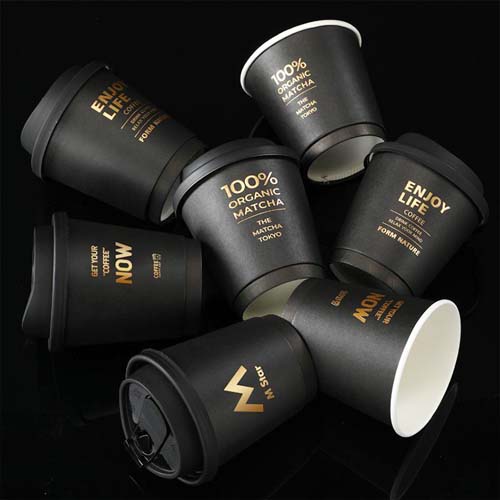
Production support available
Factories such as Anhui Nature offer custom diameters and heights, multi-color logo work, flexible minimums, full OEM and ODM development, and steady bulk supply for distributors and brand owners. Samples and technical sheets can be prepared against the specific regulations of the destination market.