I’ve watched too many buyers get burned on this exact choice. They order what looks cheapest, the shipment clears the factory fine, then it sits for three weeks at a European port because the lining fails the compost test. That is the real gap between PLA lined paper cups and PE coated paper cups.
PE is the old reliable. Polyethylene film gets extruded onto the board. It comes from oil, it is cheap, and it laughs at heat. Most PE coated paper cups stay solid past 95 °C and plenty of them handle a full 100 °C without the side walls going soft. That is why they still own the big cold-drink contracts and the low-margin hot-drink runs. The trouble starts when the cup hits the waste system. The plastic layer turns into sticky bits that clog the screens at paper mills, so most places just send the whole lot to landfill.
PLA is different from the start. It begins as plant sugar, usually corn or sugarcane, fermented into a resin. When the coating thickness is right, PLA lined paper cups seal liquid just as well for normal coffee and soft drinks. They hold 90–95 °C without drama. Good double-wall or ripple versions push a bit higher. The useful part is what happens after. Under industrial compost conditions—around 58–60 °C with steady moisture—certified PLA breaks down in 90 to 180 days. That is the number written into EN 13432 and ASTM D6400. Both materials still need to pass FDA 21 CFR 176.170 for food contact, but only the PLA versions clear the compost rules.
Here is the comparison most buyers keep open on their second screen:
| Property | PE Coated Paper Cups | PLA Lined Paper Cups |
| Source | Petroleum | Plant starch |
| Heat tolerance | 90–100 °C | 90–95 °C (higher in insulated) |
| Compost standard | None | EN 13432 / ASTM D6400 |
| Usual board weight | 190–280 gsm | 250–350 gsm |
| Dry storage life | About 12 months | Up to 18 months |
Price still wins a lot of tenders for PE. When you need half a million plain cups for convenience stores and nobody is checking compost, the lower unit cost is hard to argue with. The second the same buyer starts supplying coffee shop groups in Germany or California that publish sustainability targets, the maths flip. One rejected container costs more than the extra 20 % on the cups.
Three questions that keep coming up in calls:
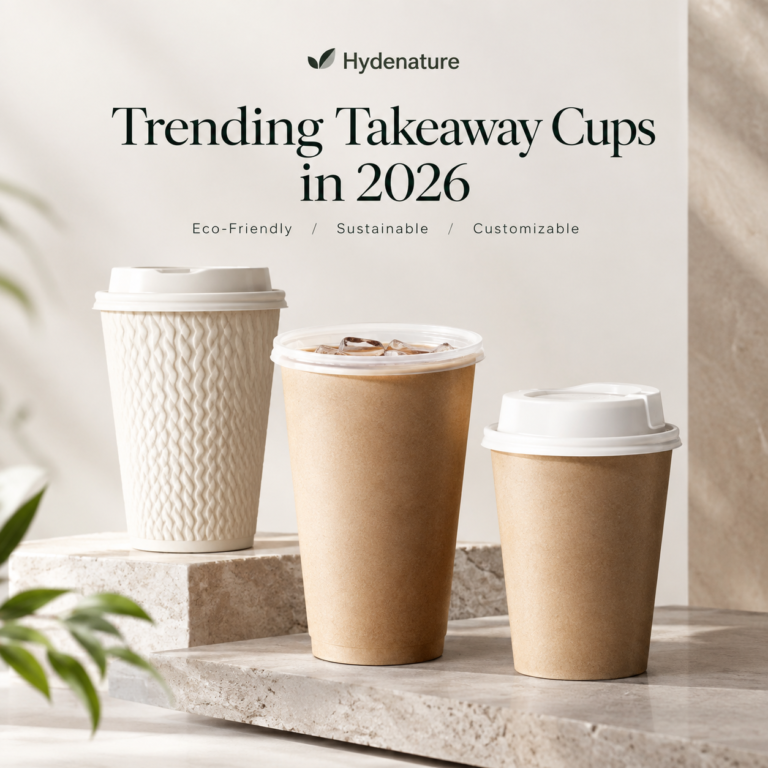
How hot can I actually pour into PLA lined paper cups? Normal coffee is fine. If the client regularly serves drinks hotter than 95 °C, switch to double-wall or ripple-wall PLA. The air gap keeps the outer wall comfortable and the structure solid.
Can either of them go into regular paper recycling? Almost never. Mills treat both linings as contaminants. Industrial compost is the designed route for certified PLA. PE has no designed route except landfill.
What MOQ should a first custom print order expect? Unprinted stock often starts around 30 000. Full colour custom print usually needs 50 000. Some factories will still open smaller trial lots on both PE and PLA if you are testing a new market.
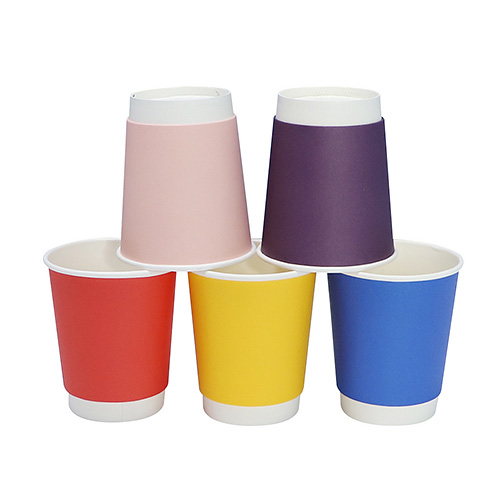
The rule that works is simple. Decide the end market first, then pick the lining. Forcing PE into a region that already bans non-compostable single-use packaging only creates later problems. Forcing PLA into a pure price war with no compost infrastructure just wastes money.
Hydenature runs both coatings on the same production lines. You can order custom sizes, full-colour printing, smaller trial quantities, full OEM or ODM work, and steady bulk supply. Buyers who need to move between PE and PLA as rules change can stay with one factory instead of rebuilding the whole chain every year.