I’ve spent the better part of two decades in the trenches of packaging procurement, negotiating with mills, testing samples in busy restaurant kitchens, and troubleshooting shipments that arrived soggy or underperforming. What I’ve learned is that eco-friendly paper packaging isn’t a buzzword—it’s a set of practical tools that must survive real heat, grease, and customer handling while satisfying regulators and tightening budgets. At Hydenature.com we deal with these realities daily for buyers hunting custom disposable food packaging and wholesale food packaging. Here’s my no-fluff breakdown based on what actually works in the field.
The Pressures Driving Change
Regulators aren’t waiting around. Europe’s SUP Directive has already pulled certain single-use plastics from shelves, and EPR rules are spreading, forcing brands to own the cleanup costs. Here in the US and elsewhere, PFAS regulations keep expanding, banning those persistent chemicals that once made paper repel grease but now create long-term headaches.
How the Materials Stack Up in Practice
| Aspect | Sugarcane Bagasse Food Containers | PLA-Coated Kraft | Basic Kraft Paper |
| Thickness / Build | Molded 0.8-1.5mm | Paper plus thin 20-40μm layer | 250-400gsm sheets |
| Heat Handling | Handles 120°C, fine in microwaves | Softens near 60°C | Dry foods only without extra lining |
| Grease & Oil Pushback | Strong built-in resistance | Solid when coated right | Needs extra treatment |
| Liquid Hold | Decent for service windows | Top-tier | Weak on its own |
| Break-Down Window | 30-90 days industrial, 60-180 home | Industrial facilities needed | Good if uncoated and certified |
| Cost Level | Mid-range among green options | Higher from processing | Cheapest starting point |
Numbers and Rules That Matter
The broader sustainable packaging world hit about USD 273 billion in 2023 and looks headed for USD 448 billion by 2030 at a 7.6% CAGR. Compostable pieces within that are growing fast too, fueled by foodservice and delivery demand.
Buyers need to know these markers cold:
- FDA for basic food safety clearance.
- BPI tied to ASTM D6400 and ASTM D6868 for real compost breakdown.
- EN13432 for Europe.
- FSC for fiber sourcing you can trace.
- PFAS limits and the SUP/EPR web of rules.
Standards at a Glance
| Rule / Mark | What It Demands | Why It Affects Your Business |
| ASTM D6400 + BPI | 90% breaks down in 180 days, safe for soil | Opens doors to US composting programs |
| EN13432 | Meets strict EU industrial composting | Lets you legally call it compostable |
| FSC | Tracks wood from responsible forests | Satisfies big retail scorecards |
| PFAS Bans | No added forever chemicals | Avoids bans in CA, NY, EU markets |
PFAS cutoffs keep arriving through 2025-2027, so suppliers are shifting harder to natural barriers in bagasse and kraft.
Smart Ways to Buy
Price per piece matters, but it’s never the whole story. Walk through these before signing:
- Unit costs usually run 20-50% above old plastic, yet big volumes plus contracts bring it closer.
- MOQs: 5,000-10,000 for ready stock, 20,000+ for printed customs.
- Lead times: 3-5 weeks standard wholesale food packaging, 8-12 for custom.
- 20ft container: roughly 300k-600k medium bagasse containers, depending on nesting.
- Full certifications for your export countries.
Printing custom disposable food packaging? Digital and flexo rule now, with CMYK and Pantone matching. Send vector files at 300 DPI. Digital presses make smaller test runs possible.
Biggest traps I’ve seen: forgetting paper drinks up moisture on long sea trips, or thinking raw fiber certs cover printed finished goods. Always pull full lab reports and test with your actual menu items and temperatures.
Questions Buyers Keep Asking
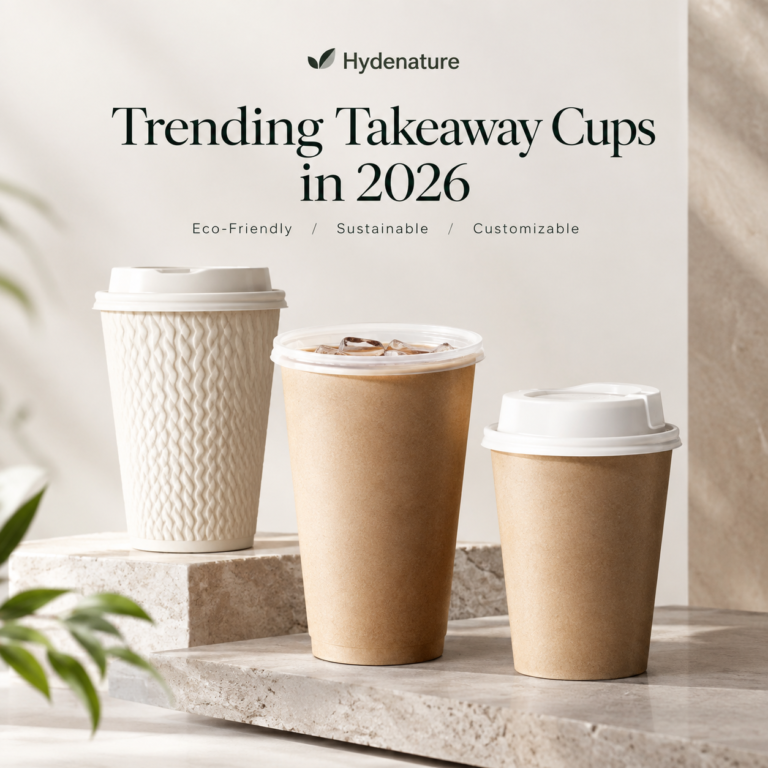
Best choice for hot drink Custom Printed Paper Cups? Double-wall kraft or coated versions hold up. Make sure the whole cup—not just the base—carries BPI or EN13432. Bagasse lids complete the set nicely.
Is FSC worth chasing for wholesale food packaging? Absolutely for anyone selling to chains or eco-conscious brands. It proves clean sourcing and shields against future deforestation rules.
Why Work with Hydenature.com
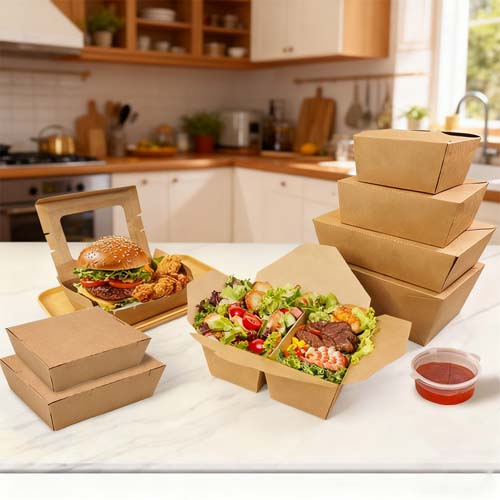
We cut through the options with real supply chain experience. Our shelves hold Custom Printed Paper Cups, Disposable Kraft Paper Bowls, Paper Food Containers and full lines that carry FDA, BPI, FSC or EN13432 as needed. Transparent mills, steady quality, and lead times that match your schedule.
Wrapping It Up
Eco-friendly paper packaging has moved past experiments into reliable, high-function territory. The winners match the material’s strengths and certs to their exact operations instead of chasing vague green labels.
With the market expanding at 7.6% CAGR and rules tightening yearly, spending time on specs and trials now pays off in compliance peace, happier customers, and smoother operations down the road. Use these details, tables, and lessons to make your next packaging decision one that holds up in the real world.