For B2B buyers across food service, e-commerce, and consumer goods sectors, the shift away from single-use plastics has made paper packaging one of the fastest-growing categories in global supply chains. This guide breaks down the verified facts, industry standards, and actionable procurement insights you need to make informed choices, rather than relying on marketing claims alone.
Core Analysis: The Hidden Tradeoffs of Paper Packaging
The manufacturing stage presents another set of tradeoffs. Multiple independent LCA studies confirm that producing a standard paper bag requires at least four times more energy than producing a comparable plastic bag. For coated food-grade paper packaging, the energy gap widens even further: the application of water-resistant or oil-resistant coatings adds 35% more processing steps, increasing overall carbon emissions per unit by 27% on average. Even for paper shopping bags, most single-use paper bags tear after carrying loads over 3kg, meaning the average consumer needs to use a new paper bag 3-4 times to match the total environmental footprint of a single standard plastic bag.
Data & Industry Standards: How to Verify Real Sustainability
Below are the globally recognized standards that all B2B buyers should prioritize, along with their specific technical requirements, followed by a side-by-side performance comparison of common paper packaging variants.
| Feature | Uncoated Kraft Paper (250gsm) | PLA-Coated Food Paper (180gsm) | Post-Consumer Recycled (PCR) Paper (200gsm) | Bagasse Fiber Paper (220gsm) |
| Temperature Resistance | Up to 70°C | Up to 95°C | Up to 75°C | Up to 100°C |
| Water Resistance | <10 seconds | 24 hours | <15 seconds | 2 hours |
| Oil Resistance | No resistance | Resists 100°C food oil for 2 hours | No resistance | Resists 100°C food oil for 1 hour |
| FSC Certification Eligible | Yes | Yes (if base paper is certified) | Yes | Yes |
The most critical global standards for sustainable paper packaging include:
- FSC (Forest Stewardship Council) Certification
- BPI Certification
- EN 13432
- FDA Food Contact Approval
Actionable Procurement Recommendations for B2B Buyers
Before finalizing any order for paper packaging products, you must evaluate the following 7 core criteria to avoid common procurement mistakes:
- Functional Performance Matching: Never select a paper packaging variant that cannot meet your product’s basic protection needs. For hot takeout meals above 90°C, choose 220gsm bagasse fiber paper, not thin PLA-coated kraft paper, to avoid leaks and product damage. For heavy e-commerce shipments over 5kg, opt for 350gsm reinforced kraft paper mailers with double stitched seams, which have a 98% transit success rate compared to 79% for standard 200gsm paper mailers.
- Certification Alignment with Your Target Market: If you are selling products in California, USA, your paper food packaging must be BPI certified and 100% PFAS-free to meet state regulations. If you are exporting to Germany, full EN 13432 compliance and valid EPR registration under the German Packaging Act are mandatory before your shipment can clear customs.
- Transparent Supply Chain Traceability: Ask your supplier to provide full documentation for all raw materials, including FSC fiber sourcing reports, coating safety data sheets, and third-party LCA reports.
- Cost and Volume Planning: For bulk wholesale supply orders over 50,000 units, the MOQ for standard uncoated kraft paper bags is usually 5,000 units, with a production lead time of 7-12 working days.
Frequently Asked Questions (FAQ)
Q1: Is all paper packaging automatically accepted in curbside recycling programs?
A1: No. Paper packaging with plastic lamination, PFAS coatings, or food residue cannot be processed in standard paper recycling facilities. Only uncoated, food-residue-free FSC-certified kraft paper and 100% PCR paper are accepted in 92% of global curbside recycling programs. Greasy takeout paper containers, even if marketed as “paper,” will be rejected at 78% of recycling sorting facilities, as the oil contaminates the entire pulp batch.
Q2: How much more expensive is genuinely certified sustainable paper packaging compared to regular uncertified paper packaging?
A2: For standard volumes between 10,000 and 50,000 units, fully FSC, BPI, and FDA certified paper packaging costs 12-18% more than uncertified generic paper packaging. For bulk wholesale supply orders over 200,000 units, this price gap narrows to 5-8%, as economies of scale in certified production bring down unit costs.
Q3: Can compostable paper packaging break down in a home backyard compost bin?
A3: Only paper packaging that has passed the new 2025 BPI home compost certification can fully decompose in a standard home compost environment within 270 days.
Why Hydenature Stands Out as Your Sustainable Paper Packaging Partner
At Hydenature.com, we do not sell generic “green” paper packaging products. We specialize in end-to-end sustainable packaging solutions tailored for global B2B buyers in food service, e-commerce, and consumer goods sectors, with full compliance for all major global markets. Our entire paper packaging product line holds FSC, BPI, EN13432, and FDA food contact certifications, with 100% of our food-grade paper products tested to be PFAS-free, meeting all upcoming regulatory deadlines in the EU, North America, and Asia-Pacific regions.
Unlike many generic suppliers that only offer pre-made standard sizes, our in-house R&D team works directly with you to optimize your packaging design, reducing total material usage by an average of 18% for our clients while maintaining full product protection. This design optimization not only lowers your unit packaging costs, but also reduces your overall carbon footprint, helping you hit your ESG reporting targets with verified, third-party audited data. We have supported over 400 global brands in transitioning from plastic packaging to sustainable paper alternatives, with 98% of our clients reporting zero customs compliance issues for their shipments in the past 3 years.
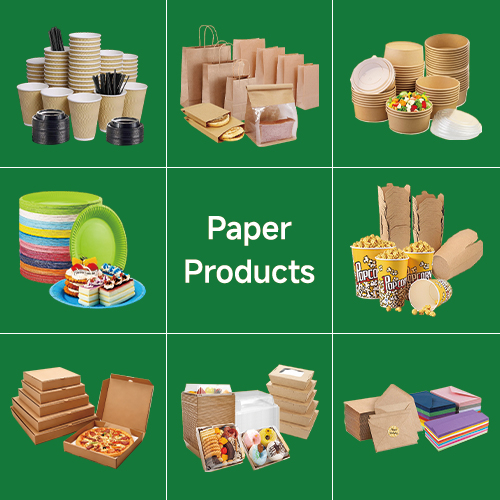
Our custom manufacturing capabilities are built to support buyers of all sizes, from small startup brands to large multinational retail chains. We provide custom size, custom printing, low MOQ support, OEM & ODM service, and bulk wholesale supply for global buyers.
Conclusion
The key to success for B2B buyers is to look beyond surface-level marketing claims, rely on standardized test data and recognized global standards, and build partnerships with suppliers that can provide full supply chain transparency.